
How to Clean Office Whiteboards and Screens: Effective Techniques for Smudge-Free Surfaces
Whiteboards and screens are essential for brainstorming and presentations, but they can quickly become sloppy with marks, dust, and smudges. Professional office cleaners often concentrate on desks and single working stations and may overlook the larger presentation surfaces to the detriment of their service package.
This article covers the importance of keeping these surfaces pristine and provides a guide to effectively cleaning and maintaining them. Discover the needed materials, step-by-step techniques, and tips for keeping your office equipment in shape.
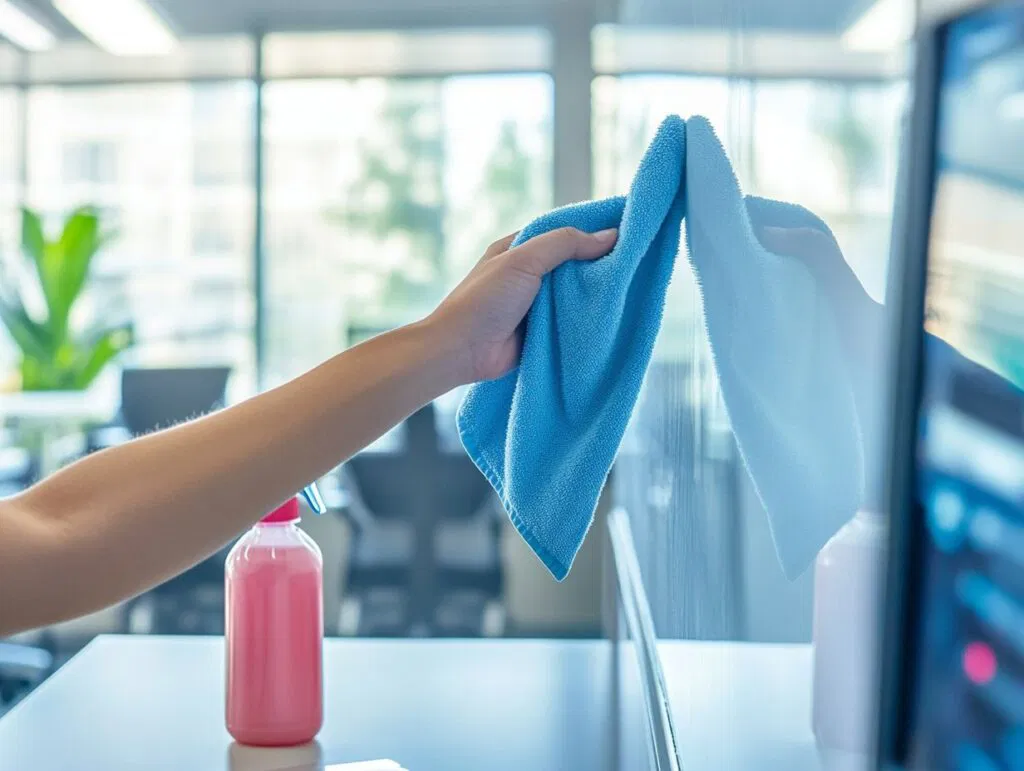
Why Clean Office Whiteboards and Screens?
Keeping your office whiteboards and screens clean is key to maintaining a productive and inviting workspace. These surfaces are not just for presentations and brainstorming sessions; they also contribute significantly to overall office hygiene and visual clarity.
By regularly cleaning these areas, you’re boosting your space’s aesthetics and enhancing your communication and collaboration efforts. It’s a simple step that can make a difference in your office management routine.
The Importance of Clean Surfaces in the Workplace
Clean surfaces in your workplace, such as whiteboards and screens, are essential for effective communication and creating a pleasant atmosphere. When these tools are free from smudges, dust, and chalk residue, they make it easier for everyone to see and engage, which boosts productivity and gives off a professional vibe.
A clean environment can significantly shape how you feel about your workplace. A study by the American Cleaning Institute found that 94% of employees believe cleanliness impacts their morale, which relates to better performance.
When organisations prioritise cleanliness, they often see a 20% increase in productivity. This shows that when surfaces are well-maintained, communication improves, and collaboration among team members becomes smoother.
A tidy workspace reduces distractions, allowing you to focus better and achieve more effective results. Ultimately, embracing cleanliness helps create an atmosphere where professionalism and productivity can flourish.
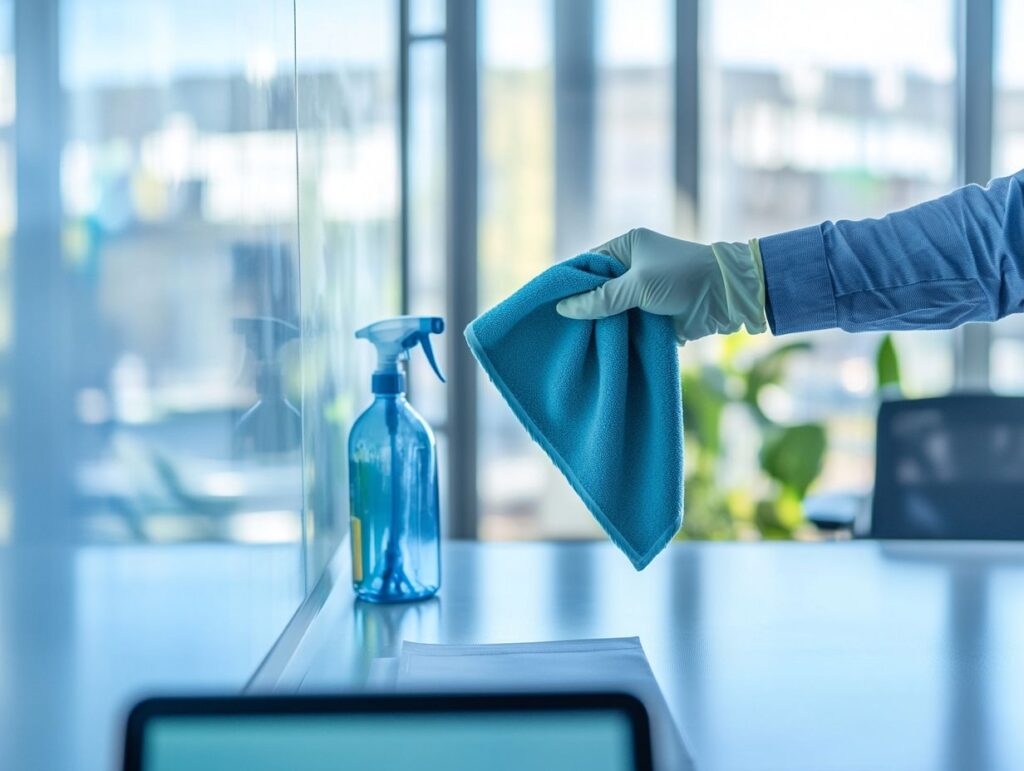
Materials Needed for Cleaning
To effectively clean your office whiteboards and screens, you’ll want to gather specific materials that guarantee a streak-free and smudge-free finish. The right cleaning supplies are key—think microfibre cloths and eco-friendly cleaners.
Without damaging surfaces, these can handle everything from stubborn marker stains to dust build-up.
Essential Supplies for Effective Cleaning
You’ll want to stock up on essential supplies for effective cleaning: microfibre cloths, isopropyl alcohol, vinegar, and spray bottles filled with water. Each item has a unique role in creating a clean and sanitised space, helping keep your workspace clean and hygienic.
Microfibre cloths are your best friends for trapping dust and dirt without needing harsh chemical cleaners—talk about effective and eco-friendly! Isopropyl alcohol is a powerful disinfectant that can zap various germs, making it perfect for sanitising hard surfaces. And don’t forget about vinegar; it doubles as a natural deodoriser and stain remover.
If you’re looking for greener options, many brands offer plant-based cleaners that can replace traditional harsh chemicals, a great way to reduce your environmental impact. To get the most out of these supplies, dampening your microfibre cloths slightly before use boosts their dirt-trapping powers. And remember to ventilate your area when using isopropyl alcohol to keep things safe.
Preparing the Surfaces for Cleaning
Preparing the surfaces for the best results is essential before you start cleaning. Start by removing any excess ink from the whiteboards and dust from the screens. This small step can enhance the effectiveness and techniques of your cleaning products.
Trust me, you’ll thank yourself later!
Removing Excess Ink and Dust
Removing excess ink and dust is crucial in your cleaning routine because it sets the stage for a thorough and effective cleaning. Start by gently grabbing a soft cloth or eraser to remove visible marks or dust. This way, you’ll ensure the surface is ready for deeper cleaning.
Moreover, microfiber cloth can enhance your results on more delicate surfaces, such as screens and printed materials. If you’re dealing with stubborn ink stains, dab a bit of surgical spirit on a cotton bud, and you should see some progress.
Make regular cleaning a priority. Adopting a weekly schedule prevents things from piling up and helps protect the integrity of your surfaces, maintaining their appearance and longevity. Using specific techniques for different materials ensures a comprehensive cleaning process that leaves your spaces immaculate and professional.
Techniques for Cleaning Whiteboards
You must use the proper techniques to achieve a smudge-free, sparkling-clean whiteboard. Knowing the best practices for whiteboard maintenance helps it last longer and ensures it remains a functional and effective tool in your workspace.
Step-by-Step Instructions for a Smudge-Free Surface
Follow these simple steps to achieve a smudge-free surface on your whiteboard: Gather your cleaning supplies and erasers, then dive into these effective cleaning methods.
- First, grab a quality whiteboard cleaner or whip up a DIY solution with equal water and vinegar. Dampen a microfibre cloth with the cleaner—it will help you tackle dirt without scratching the surface.
- You can gently rub stubborn stains with isopropyl alcohol or use a dedicated stain remover.
- Remember to use the right erasers; you want to protect your board, not damage it.
Regular cleaning—ideally once weekly—keeps your whiteboard clear and bright, making it perfect for writing and erasing. Plus, a surface protector can help it last longer by guarding against persistent marks.
Techniques for Cleaning Screens
Cleaning your screens requires finesse to keep them smudge-free and functioning beautifully. The right techniques for caring for your electronics can help you achieve a clearer view of your display and help your office equipment last longer.
Proper Methods for Different Types of Screens
The right methods for cleaning screens depend on the surface you are dealing with. Using appropriate cleaning techniques to remove residue effectively without damaging your electronics is extremely important.
For example, LED screens require specific care to avoid those annoying streaks and scratches. Thus, using a microfiber cloth dampened with a recommended solution is essential. Similarly, LCD displays can be sensitive to harsh chemicals, so you should only use products designed for electronics. Plasma screens are even more delicate, so cleaning them with an ultra-soft cloth is best to avoid abrasions.
Always ensure that your cleaning solution is compatible, no matter what type of screen you have. Using the wrong products can cause permanent damage and affect performance over time.
Maintaining Clean Surfaces
Keeping your office surfaces clean is all about having a consistent cleaning schedule and using a few proactive tips to ensure your whiteboards and screens look their best.
Regular maintenance is crucial; it boosts office hygiene and helps create a more productive working environment for you and your team.
Tips for Keeping Whiteboards and Screens Clean
Try these practical tips on regular upkeep and office hygiene to keep your whiteboards and screens looking sharp. By implementing these strategies, you can seriously boost the cleanliness and organisation of your workspace.
Regular cleaning doesn’t just make everything look nice; it also creates a healthier environment, which helps reduce distractions and encourages productivity. Start by setting up a cleaning schedule that matches how often you use your space so those high-traffic areas get the attention they need more often.
Organising your workspace is key, too. Grab some organisers and storage solutions to reduce clutter, making it much easier to clean surfaces. Microfibre cloths and the right cleaning solutions will help you keep your office equipment in top shape, allowing you to create a more efficient and welcoming workspace for everyone.
Check our latest article on how to communicate effectively with high-level corporate executives!