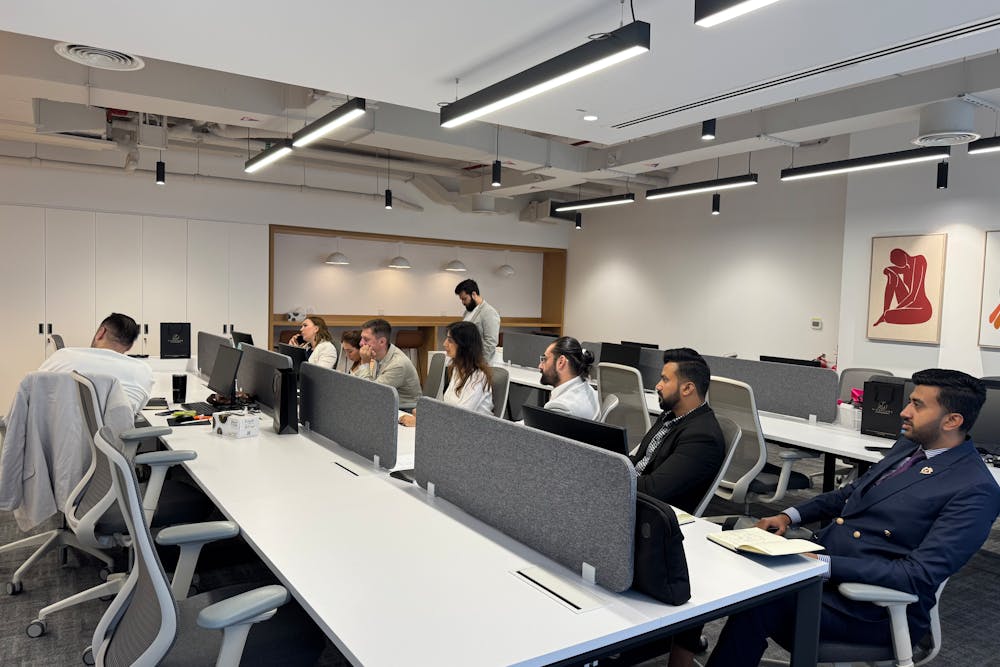
There is a particular kind of office that defines East London’s creative quarter. Raw concrete pillars, exposed brick walls carrying decades of industrial history, reclaimed timber shelving, pendant Edison bulbs, and somewhere near the kitchen – a chalkboard menu offering oat milk flat whites. Shoreditch, Hoxton, and Clerkenwell have become synonymous with this aesthetic: deliberately unfinished, defiantly non-corporate, and architecturally arresting in a way that no amount of carpet tile and suspended ceilings could ever replicate. For the businesses that occupy these spaces, the look is part of the brand. For the facilities managers and cleaning contractors responsible for maintaining them, it represents a set of surface challenges that standard commercial cleaning protocols are simply not built to handle.
Beautiful Surfaces, Unconventional Problems
The visual appeal of a converted Shoreditch warehouse or a stripped-back creative studio is inseparable from the materials that define it. Exposed brick, polished concrete, reclaimed wood, raw steel, and open industrial ductwork all contribute to an atmosphere that is genuinely distinctive. Those same materials – porous, textured, unsealed, or delicately finished – are significantly more demanding to clean than the smooth, wipe-clean surfaces of a conventional office fit-out. Standard cleaning products developed for laminate, carpet, and glass can actively damage these surfaces, sometimes irreversibly. Understanding the challenge requires a closer look at what these surfaces actually are, and what happens to them when cleaning products and techniques are applied without that understanding.
Exposed Brick: Porous, Dusty, and Easily Damaged
Exposed brick is perhaps the most characteristic feature of Shoreditch’s interior aesthetic – and one of the most problematic surfaces in a cleaning context. Brick is inherently porous: it traps dust, absorbs moisture, and over time accumulates a film of grime that resists casual removal yet is equally vulnerable to aggressive treatment. Harsh alkaline or acidic cleaners risk efflorescence – drawing mineral salts out of the mortar and producing the distinctive white powdery staining that is difficult and expensive to reverse. Steam cleaning and high-pressure water can force moisture deep into the wall structure, causing long-term damage that no amount of surface treatment will undo.
The correct routine approach is dry brushing – a soft-bristle brush applied to dislodge particulates without introducing moisture – combined with periodic treatment using a pH-neutral masonry cleaner applied sparingly with appropriate dwell time and carefully rinsed. Where exposed brick has been left unsealed, post-deep-clean treatment with a breathable masonry consolidant significantly reduces ongoing maintenance requirements and protects the surface without altering the character that makes it worth having in the first place.
Polished Concrete: Sealed but Sensitive
Polished and micro-cement concrete floors and walls have become ubiquitous across East London’s creative office sector, and they present a different but equally specific set of challenges. The polished surface is typically protected by a sealant layer – polyurethane or epoxy in most cases – which makes it more resistant to staining than raw concrete. The sealant, however, is the critical vulnerability. Many standard floor cleaners contain ammonia-based compounds or high-pH surfactants that degrade sealant formulations over time, leaving the surface progressively more porous and increasingly prone to the deep-set staining that polishing alone cannot address.
Routine maintenance should use pH-neutral, sealant-safe cleaners in low concentrations with minimal dwell time. Wet mopping should be followed promptly by dry buffing: standing water penetrates micro-scratches in the sealant and causes the surface clouding that is the most common maintenance complaint in polished concrete environments. Periodic re-sealing – annually is a reasonable baseline for standard office foot traffic, more frequently in high-use entrance areas – is essential to maintaining both the visual quality and the long-term cleanability of the surface.
Reclaimed Timber, Raw Steel, and the Wider Material Palette
Exposed brick and polished concrete are the headline acts, but Shoreditch creative offices typically feature a considerably wider material palette, and each additional surface type introduces cleaning considerations that a generic specification will not anticipate.
Reclaimed Timber: Character Worth Preserving
Reclaimed wood surfaces – whether structural beams, feature walls, flooring, or bespoke furniture – are valued precisely because of their age, patina, and visible history. They are also, by definition, surfaces that have already experienced considerable wear. Cleaning reclaimed timber requires a dry-first discipline: dust and debris should be fully removed before any moisture is introduced, since reclaimed wood is often less dimensionally stable than new timber and may feature gaps, deep grain, and surface irregularities that trap water and promote localised rot or swelling. Oil-based cleaners formulated for natural wood are appropriate for periodic treatment. Solvent-based products should be avoided entirely – they strip existing wax or oil finishes and can cause surface cracking that is difficult to repair without compromising the patina that gives the material its value.
Raw Steel and Industrial Metalwork
Exposed steel – structural columns, staircases, shelving brackets, and mezzanine frameworks – is a consistent feature of converted East London industrial space, and its principal maintenance concern is rust inhibition. Regular dry dusting prevents moisture accumulation on horizontal ledges and flat surfaces, and any watermarks or early-stage oxidation should be treated promptly with a proprietary metal cleaner rather than left to develop. Where steel carries a deliberately raw, blued, or chemically treated finish – as is common in spaces where the industrial aesthetic has been consciously designed rather than simply retained – abrasive cleaning pads and steel wool are entirely counter-productive. They alter the surface texture and remove finishes that, once gone, require specialist restoration to recover. This is not an edge case: it is one of the more common and avoidable sources of damage in creative office environments.
Dust, Air Quality, and the Open-Ceiling Problem
One consequence of the warehouse-aesthetic office that is routinely underestimated is the dramatically increased dust load created by exposed ceilings. Removing or omitting the suspended ceiling that contains ductwork, cabling, pipework, and structural elements in a conventional office fit-out exposes all of those surfaces directly to the working environment. Industrial pipework, steel joists, electrical conduit, and HVAC ductwork accumulate significant quantities of dust – dust that, without a containing ceiling above, circulates freely through the workspace below and settles continuously on desks, equipment, and the very surfaces being so carefully maintained at floor level.
High-level cleaning – the routine dusting of exposed overhead infrastructure – is therefore not an occasional add-on in these environments. It is a core maintenance requirement. Telescopic dusting equipment, microfibre heads, and electrostatic tools extend reach without access equipment in standard-height spaces, and scheduling high-level cleans at regular intervals – monthly as a minimum in occupied creative offices – is a necessary discipline in a way that simply does not arise in conventionally fitted buildings.
Air quality is a directly related concern. Exposed brick, unfinished concrete, and open structural elements generate more fine particulate matter than sealed-surface environments. In busy creative studios with high occupancy and frequent movement throughout the working day, this accumulation is significant. Including HVAC filter inspection and replacement, and air purifier maintenance where units are present, within the overall cleaning scope addresses the environment holistically rather than surface by surface.
Building a Cleaning Specification Around Non-Standard Surfaces
The cleaning challenges posed by a Shoreditch creative office are not insurmountable – but they require a specification that honestly reflects what is actually in the space. A standard commercial cleaning contract designed for carpeted floors, laminate desks, and glass partitions will not serve these environments adequately, and the shortfall tends to show quickly and visibly. The wrong product on polished concrete dulls the sealant; the wrong technique on exposed brick starts efflorescence; the wrong cloth on a deliberately aged steel finish changes it in ways that are immediately noticeable and not straightforwardly reversible. In a space where the surfaces themselves are a core part of the building’s value proposition, these are not minor housekeeping failures – they are material ones.
What a Specialist Cleaning Brief Should Cover
A cleaning specification for this type of office should identify every non-standard surface and assign it a specific approved product, tool, and method. Critically, it should also document prohibited products alongside approved ones. Negative specification – recording what must not be used, and why – is at least as valuable as the positive list, particularly in environments where multiple cleaning operatives work across shifts or where contractor changes introduce risk of knowledge loss over time.
Frequency should be defined separately for different surface categories rather than applied uniformly. Exposed overhead steelwork may require attention monthly or quarterly; polished concrete in a high-traffic entrance zone may need daily maintenance. A periodic review – annually at minimum, or following significant changes in office layout or occupancy patterns – ensures the specification remains current as the space evolves. Engaging a contractor with demonstrable experience of industrial and creative office environments, rather than a generalist commercial provider, is the most direct way to ensure the brief is grounded in practical surface knowledge rather than convenient assumption.
Keeping the Grit, Losing the Grime
The raw, textured, industrial aesthetic that defines Shoreditch’s best creative offices is not low-maintenance – it is high-maintenance by design. The surfaces that give these spaces their character are almost without exception more demanding than the surfaces they replaced. Exposed brick marks. Polished concrete dulls. Reclaimed timber dries out and cracks. Raw steel oxidises. None of these outcomes is inevitable, and none requires heroic intervention to prevent – but all of them require a cleaning programme that is specifically calibrated to each surface type, consistently delivered, and periodically reviewed as the building and its occupancy evolve.
The creative offices of Shoreditch, Hoxton, and Clerkenwell have become some of the most distinctive and desirable commercial spaces in London. For facilities managers and building operators across East London’s creative districts, getting the cleaning specification right is ultimately about protecting a significant asset: not just the physical fabric of the building, but the carefully constructed aesthetic identity that tenants are, in many cases, paying a substantial premium to inhabit.